
Commercial Landscape Maintenance on Cape Cod: What Should a Professional Program Include?
Commercial landscape maintenance is more than keeping grass cut and planting beds tidy. For businesses, campuses, communities, associations, and other managed properties, landscaping is an ongoing operational responsibility that affects how the property looks, functions, and is experienced by the people who use it.
A professional commercial landscape maintenance program should bring those responsibilities together under a coordinated plan. That can include routine grounds maintenance, horticultural care, irrigation monitoring, seasonal work, property inspections, communication, and planning for future needs.
Outerland provides professional landscape maintenance across Cape Cod for residential and commercial properties, with service plans tailored to the property rather than a single standardized checklist.
What Is Commercial Landscape Maintenance?
Commercial landscape maintenance is the ongoing management of landscaped areas surrounding a business, campus, community, association, or other commercial property.
The scope depends heavily on the site. A small professional office may primarily need consistent lawn and planting-bed care. A larger campus or community may contain extensive turf, mature plantings, irrigation systems, gathering spaces, entrances, walkways, and multiple landscaped zones that need coordinated attention.
A good maintenance program starts by understanding those differences.
Rather than asking only, “How often will the lawn be mowed?” commercial property managers should consider the larger question: “How will the entire landscape be managed throughout the year?”
1. Routine Lawn and Grounds Maintenance
Routine grounds care forms the foundation of many commercial landscape maintenance programs.
Depending on the property, this may include mowing, trimming, edging, general cleanup, weed management, and ongoing attention to lawn areas. Frequency should reflect seasonal growth and site conditions rather than relying on the same assumptions for every property.
Consistency matters on commercial sites because neglected areas can become particularly noticeable around entrances, parking areas, pedestrian routes, signage, and other high-visibility spaces.
Routine service should therefore be viewed as part of overall property presentation, not simply a recurring mowing appointment.
2. Garden and Planting Bed Care
Commercial properties often contain landscape areas that need more detailed horticultural attention than routine grounds crews alone can provide.
Shrubs, perennials, ornamental plantings, and seasonal displays may require pruning, weeding, mulching, deadheading, planting, soil care, and ongoing observation.
Outerland’s gardening services provide detail-focused care for planting areas, including pruning, planting, soil care, seasonal displays, and ongoing garden upkeep.
For commercial properties where gardens contribute significantly to entrances, gathering areas, or the character of the site, this detailed care can be an important part of the maintenance plan.
3. Pruning and Plant Management
Plants do not all need attention at the same time or in the same way.
A professional maintenance program should account for the types of shrubs, trees, perennials, and other plant material present on the property rather than treating pruning as a universal task performed according to one schedule.
Plant management also provides an opportunity to observe how the landscape is developing. Over time, certain plants may become crowded, struggle in their locations, or no longer support the intended design.
Good maintenance is therefore both corrective and observational. It keeps the landscape presentable today while identifying issues that may affect it later.
4. Irrigation Monitoring and Water Management
Irrigation plays an important supporting role in many commercial landscapes.
A maintenance program should consider how effectively irrigation is serving lawn and planting areas and flag visible concerns when they emerge. Landscapes change over time, and watering needs can change with them.
This becomes especially important on properties containing different landscape zones. A large turf area does not necessarily have the same needs as ornamental planting beds or newly installed material.
Coordinating irrigation awareness with routine landscape maintenance helps property managers view water and plant care as connected responsibilities rather than separate systems.
5. Seasonal Cleanup and Property Preparation
Commercial landscapes require different kinds of attention as the seasons change.
Spring may involve cleanup and preparation after winter, while fall can bring leaf and debris removal, garden cleanup, and preparation for colder conditions. Properties with significant plantings may also have seasonal pruning, mulching, and bed-care needs.
Outerland’s seasonal maintenance programs include services such as spring and fall cleanup, pruning and trimming, mulching, weeding, and lawn mowing.
Commercial properties should plan for these transitions in advance. Waiting until seasonal work becomes visibly overdue can make property management more reactive than necessary.
6. Regular Property Inspections
One of the most valuable parts of professional commercial landscape maintenance happens between the obvious tasks.
Routine observation can identify declining plants, irrigation concerns, damaged landscape areas, unusual growth, cleanup needs, and other issues that may warrant attention. This allows the landscape contractor and property manager to discuss problems before they become larger or more disruptive.
Commercial maintenance should therefore include a clear understanding of who is looking at the property beyond completing scheduled tasks.
Outerland’s Cape Cod maintenance programs include ongoing property inspections and care recommendations as part of its broader approach to property management.
7. Clear Account Management and Communication
Commercial landscaping involves coordination.
Property managers need to know who their point of contact is, how concerns will be communicated, and how recommendations for additional work will be handled.
Outerland assigns maintenance clients an Account Manager who communicates service updates, performs quality inspections, and helps manage future projects. That structure provides a consistent point of communication rather than leaving property managers to determine which crew or department to contact.
This becomes increasingly valuable as properties become larger or require multiple landscape services.
8. Planning for Landscape Improvements
Maintenance can reveal opportunities that are difficult to see from a one-time property assessment.
Perhaps a planting repeatedly struggles in a particular location. An entrance may need a stronger visual presence. A heavily used area may no longer function well for the people using it. Older landscape areas may simply need thoughtful renewal.
A maintenance provider with broader design and construction capabilities can help turn those observations into a long-term plan. Outerland’s landscape installation and construction services can support improvements ranging from planting installation to more substantial changes to outdoor spaces.
This creates continuity between maintaining what exists and thoughtfully improving the property over time.
How Should a Commercial Maintenance Program Be Structured?
There is no single maintenance package that makes sense for every commercial property.
The appropriate scope depends on factors such as property size, landscape complexity, site usage, plant material, irrigation, seasonal demands, appearance standards, and the number of areas that need to be managed.
For that reason, property managers should look for a clearly defined program that answers several practical questions:
- What routine services are included?
- How frequently will different areas be maintained?
- Who oversees the account?
- How are property issues reported?
- How are seasonal needs handled?
- How will additional recommendations or future improvements be communicated?
Clear expectations make it easier to evaluate the quality of a landscape maintenance program over the long term.
Commercial Landscape Maintenance Should Be Proactive
The strongest commercial maintenance programs do not simply respond when something looks wrong.
They create a repeatable process for routine care, seasonal transitions, communication, property observation, and long-term planning. This helps the landscape remain consistently managed while giving property owners and managers a clearer understanding of what is happening across the site.
Outerland brings more than three decades of New England landscape experience to its full-service approach, combining maintenance with gardening, design, construction, and seasonal property care.
For decision-makers still evaluating potential providers, our guide to selecting a commercial landscape company covers the questions worth asking before choosing a contractor.
Discuss Commercial Landscape Maintenance With Outerland
A commercial landscape should have a maintenance program built around the property itself, its use, and the standards expected by the people responsible for it.
Contact Outerland to discuss commercial landscape maintenance and long-term property care for your Cape Cod business, campus, community, or managed property.
Frequently Asked Questions
Commercial landscape maintenance may include lawn and grounds care, garden maintenance, pruning, mulching, weed management, irrigation monitoring, seasonal cleanup, property inspections, and ongoing landscape planning. The exact services should be tailored to the property.
Service frequency depends on the property, season, landscape complexity, growth conditions, and appearance standards. Active growing periods generally require more frequent attention than slower seasons, and different areas of the same property may need different schedules.
Commercial landscaping is a broad term that can include design, installation, construction, planting, and maintenance. Commercial landscape maintenance specifically refers to the ongoing care and management of an established property’s landscape.
Look for a provider that clearly defines the scope of service, scheduling, communication process, account oversight, seasonal responsibilities, and how additional landscape needs are identified. Experience managing properties with similar complexity is also valuable.
A full-service landscape company can coordinate ongoing maintenance with future design, planting, construction, irrigation, and other improvements. This can provide greater continuity because the team maintaining the property can also help identify and plan longer-term landscape needs.
Related Posts

Landscape Maintenance Schedule for Cape Cod Homes: A Month-by-Month Guide
Keeping a Cape Cod landscape healthy and presentable throughout the year takes more than scheduling a spring cleanup and mowing…
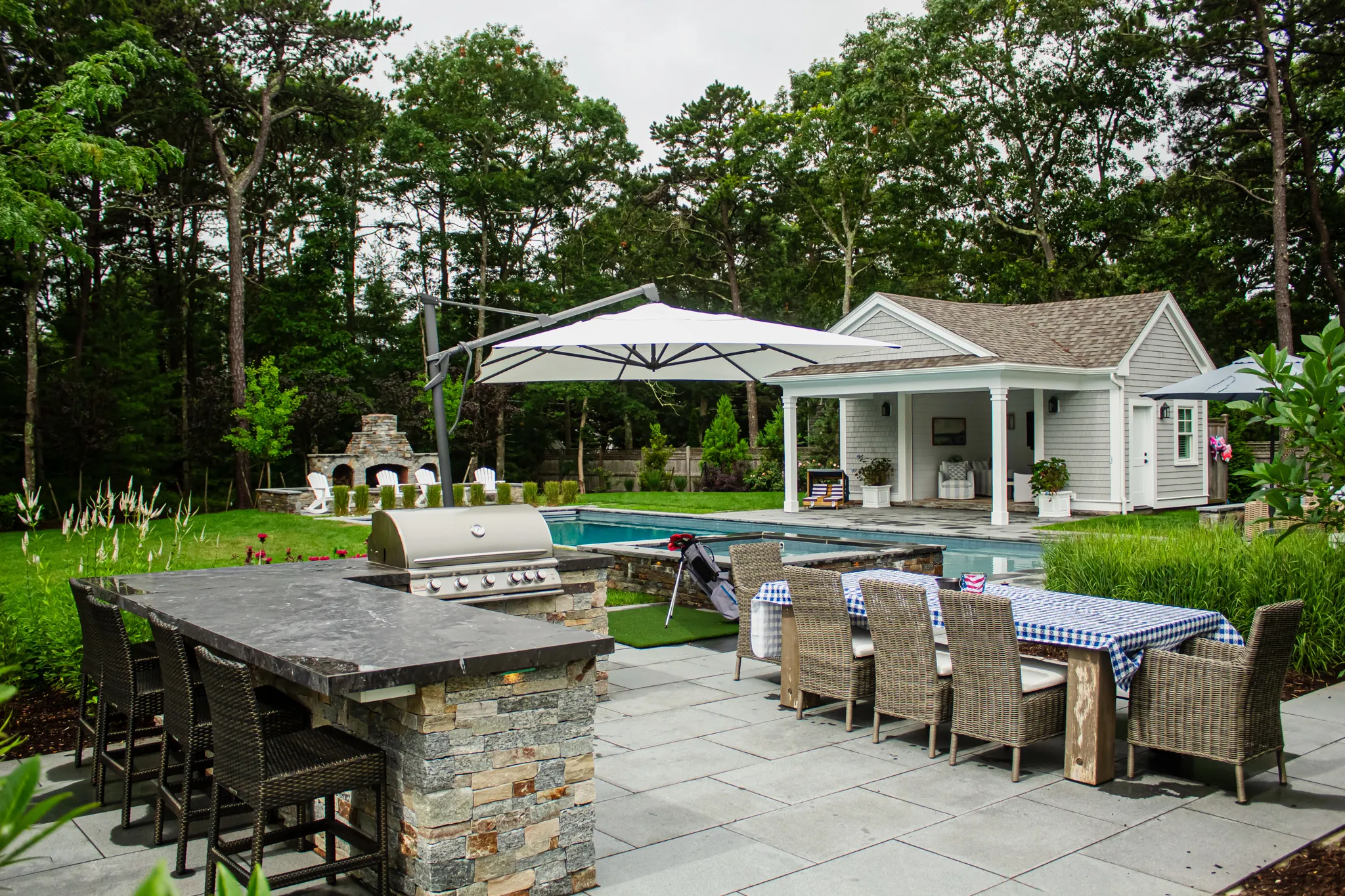
Planning a Patio & Outdoor Kitchen on Cape Cod: Design, Cost & Construction Considerations
A patio and outdoor kitchen can turn a backyard into a true extension of the home. Instead of simply creating…

How Much Does Landscape Design Cost on Cape Cod?
The cost of landscape design on Cape Cod depends on the size of the property, complexity of the plan, site…