
How Do You Plan Landscape Lighting for an Entire Property?
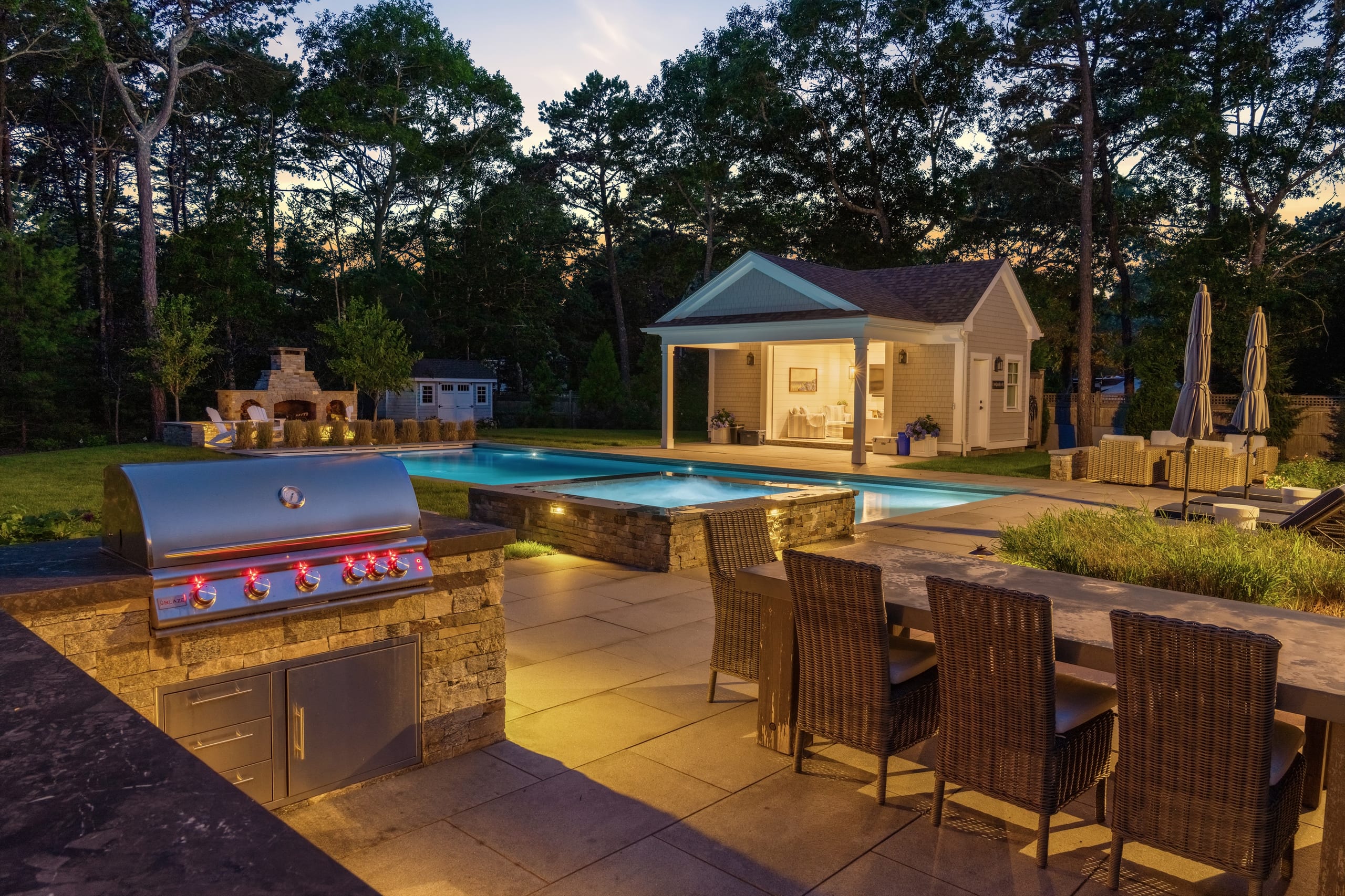
Whole-property landscape lighting starts with circulation.
Before deciding which individual landscape features to illuminate, it helps to understand how the property is used after sunset. Where do vehicles arrive? Which entrance is used most frequently? How do people travel from the driveway to the house? Which paths connect the home with patios, gardens, and other outdoor areas?
Once those patterns are understood, lighting can be organized around the places where it provides a clear purpose.
This creates a hierarchy across the property. Frequently used entrances and routes may receive more attention, while garden features and other focal points can provide visual interest without requiring every part of the landscape to be equally bright.
Landscape Lighting for Driveways and Entrances
The experience of a property often begins before someone reaches the front door.
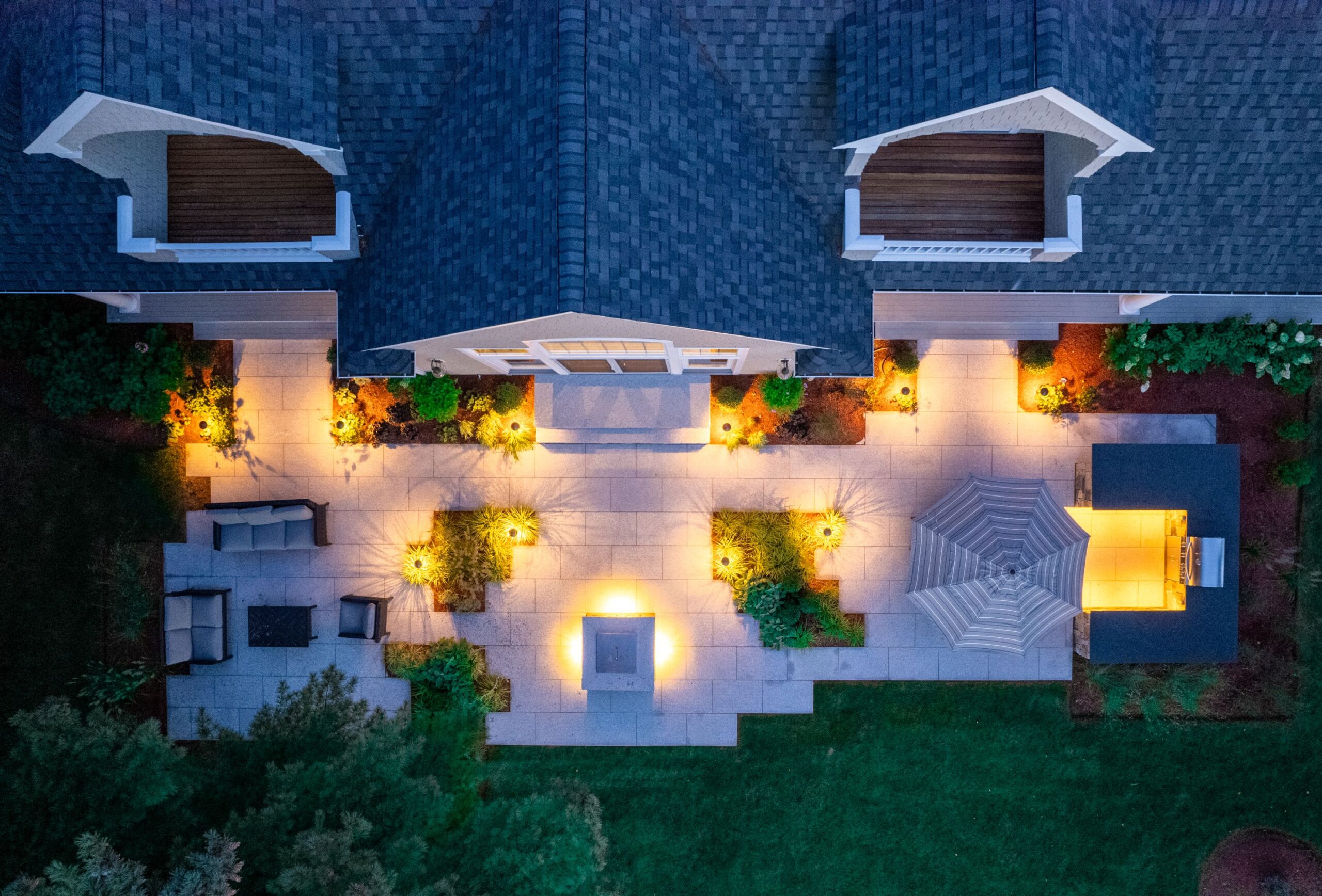
Driveways, parking areas, entrance walks, and the landscape surrounding them establish the arrival sequence. Thoughtful outdoor lighting can help define that progression after dark.
A long driveway may require a different approach than a compact arrival area near the house. The location of turns, walkways, landscape features, and transitions between driving and pedestrian areas can all influence the plan.
The objective is not necessarily to illuminate the entire driveway uniformly. Lighting can instead be considered at meaningful points along the arrival route and where people transition from vehicles to walkways and entrances.
Connecting Walkways, Steps, and Changes in Elevation
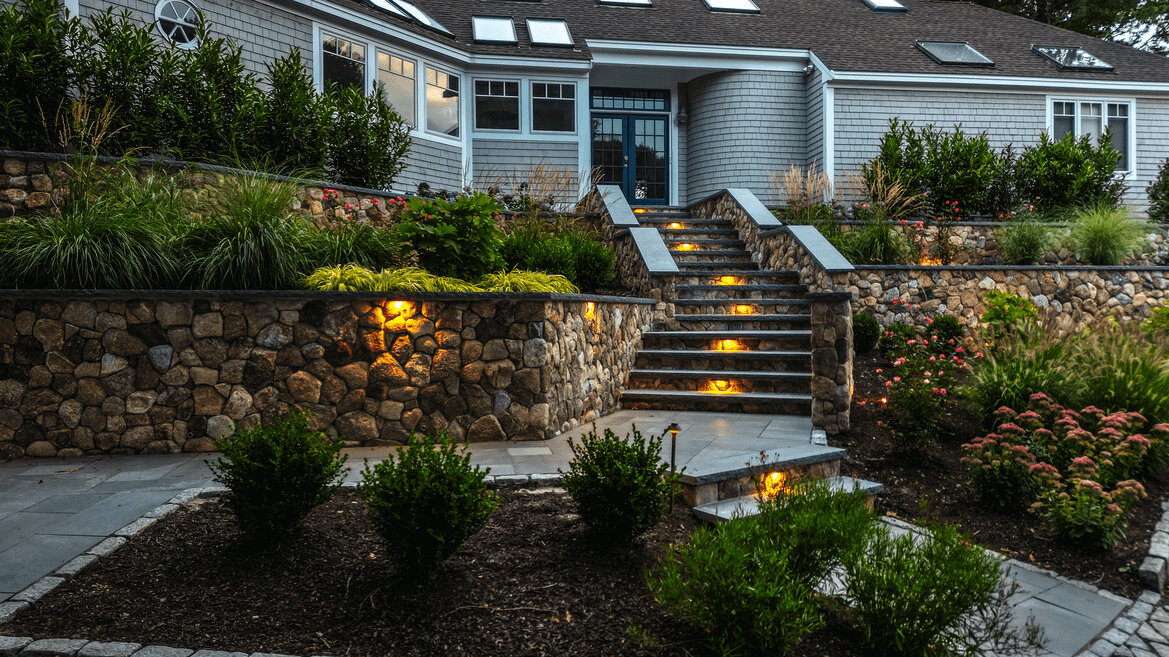
Outdoor movement becomes more complicated after sunset, particularly when a property contains several walkways or changes in grade.
Steps, turns, intersections, and transitions between landscape materials are logical areas to evaluate when planning outdoor lighting. Instead of placing lights according to a repetitive pattern, the layout can respond to how people actually experience the route.
This is particularly important when new circulation routes are being created as part of a larger project.
Outerland’s landscape installation and construction services in Barnstable can coordinate walkways, planting, masonry, and other improvements as part of a complete property plan.
Creating a Consistent Lighting Plan Across Multiple Outdoor Areas
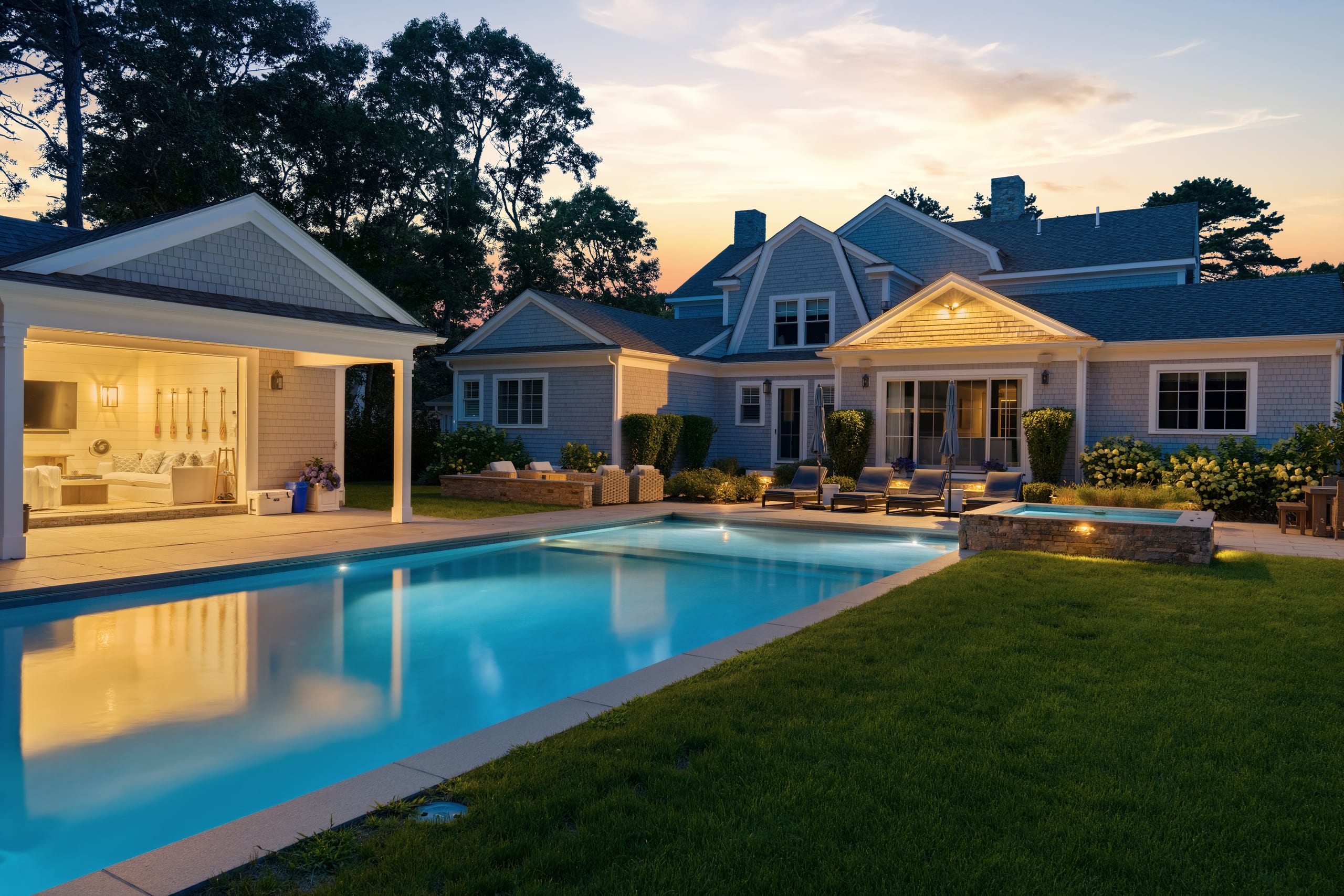
Properties with several outdoor destinations present a different design challenge than landscapes centered around one primary space.
A home may have a formal entrance, secondary entrance, patio, garden, lawn, driveway, and additional gathering areas. Each space may have its own lighting needs, but the property should still feel connected.
That does not mean using the same approach everywhere.
An entrance may need clearer definition. A garden may call for more selective lighting. A pathway serves primarily as a connection between destinations. A patio may benefit from lighting that helps it remain visually connected to the surrounding landscape.
Planning these spaces together helps avoid a property that feels like a collection of unrelated lighting projects.
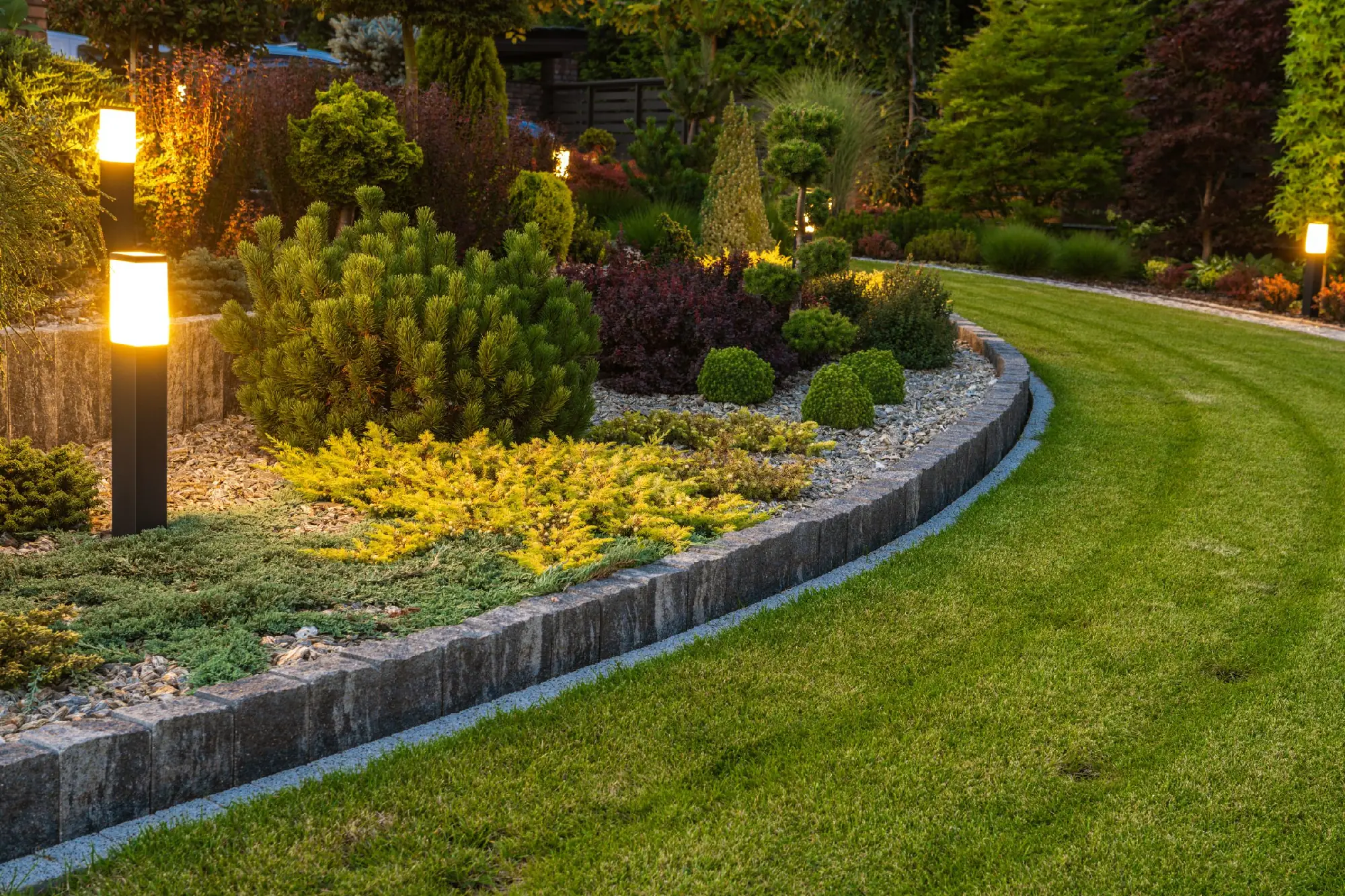
Using Outdoor Lighting Around Hardscapes and Masonry
Hardscape features help establish the physical structure of a landscape.
Walkways direct movement. Steps manage grade changes. Patios create destinations. Walls can define spaces or become significant visual elements themselves.
Lighting can support those functions while also revealing selected textures and forms after dark.
Homeowners considering new masonry can plan lighting at the same time through Outerland’s hardscape and masonry services in Barnstable. This allows constructed features, surrounding plantings, circulation, and nighttime use to be considered together.
Existing masonry can also be evaluated for lighting without requiring a complete reconstruction of the landscape.
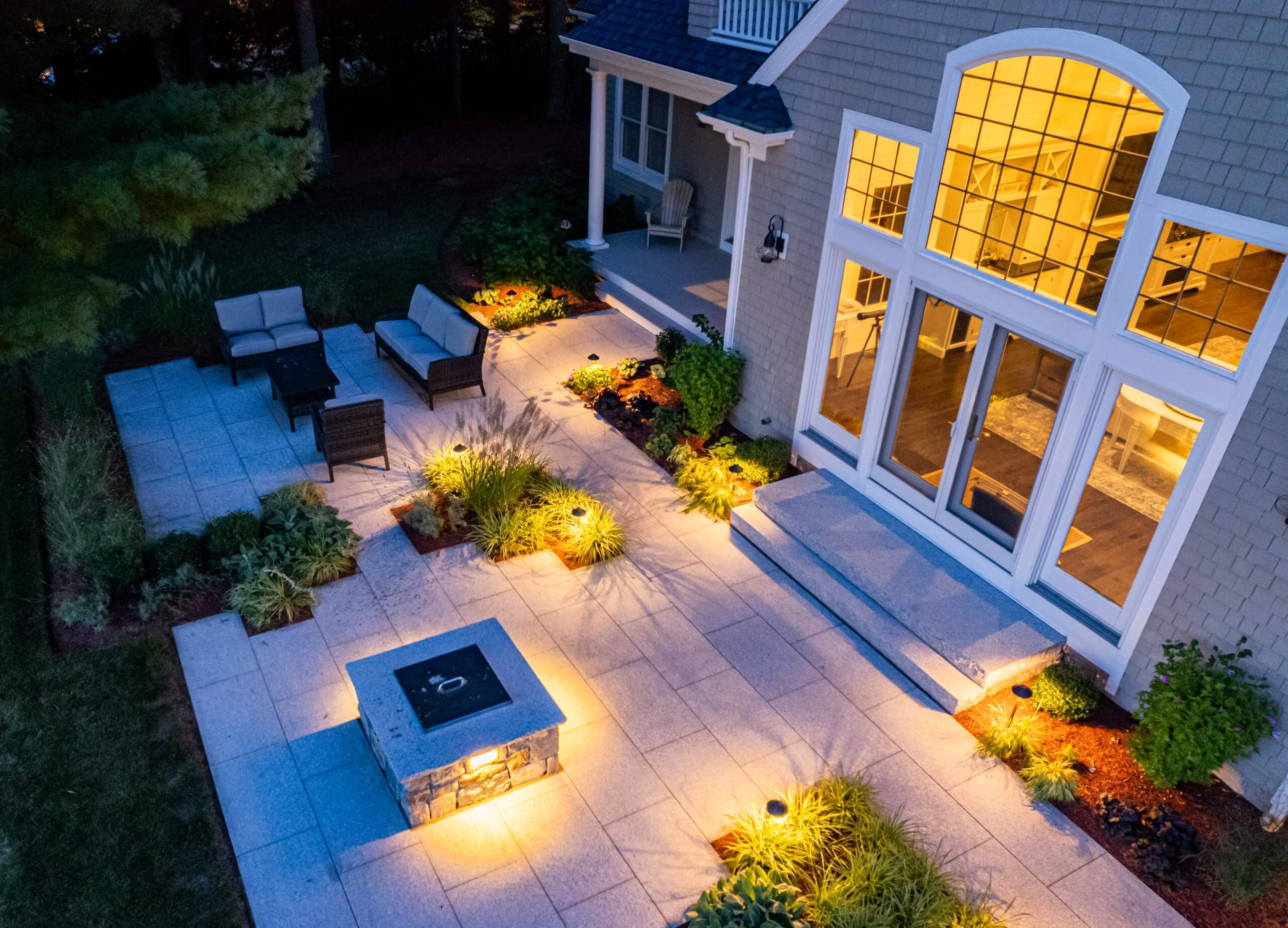
How Should Gardens Fit Into a Whole-Property Lighting Plan?
Garden lighting should support the larger composition rather than compete with it.
On a property with several illuminated areas, strategically selected plantings can create visual connections between them. A tree visible from multiple parts of the property may become a useful focal point. Planting near an entrance can help frame the arrival experience. A garden beyond a patio can provide depth after dark.
Not every garden bed needs lighting.
Selecting important views and plant features can preserve contrast while keeping the landscape visually interesting. Outerland’s gardening services in Barnstable provide ongoing horticultural care for landscapes that continue changing as plants grow and mature.
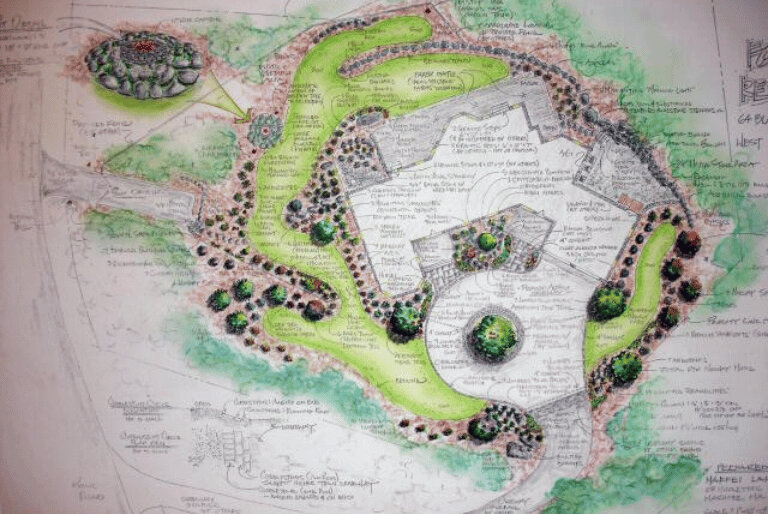
Should Landscape Lighting Be Included in a New Landscape Project?
A new landscape or major property renovation creates an excellent opportunity to discuss lighting early.
The design process determines where paths, patios, planting areas, entrances, masonry, and other features will be located. Considering nighttime use at the same stage helps ensure that the lighting plan responds to the finished property rather than being developed independently afterward.
This is especially useful for projects that change circulation.
A new walkway, relocated gathering space, expanded patio, or redesigned entrance can change how people move around the property. Planning for both daytime and nighttime use provides a more complete understanding of those decisions.
Landscape lighting can still be added to an existing property, but larger construction projects provide an opportunity to think about the entire system at once.
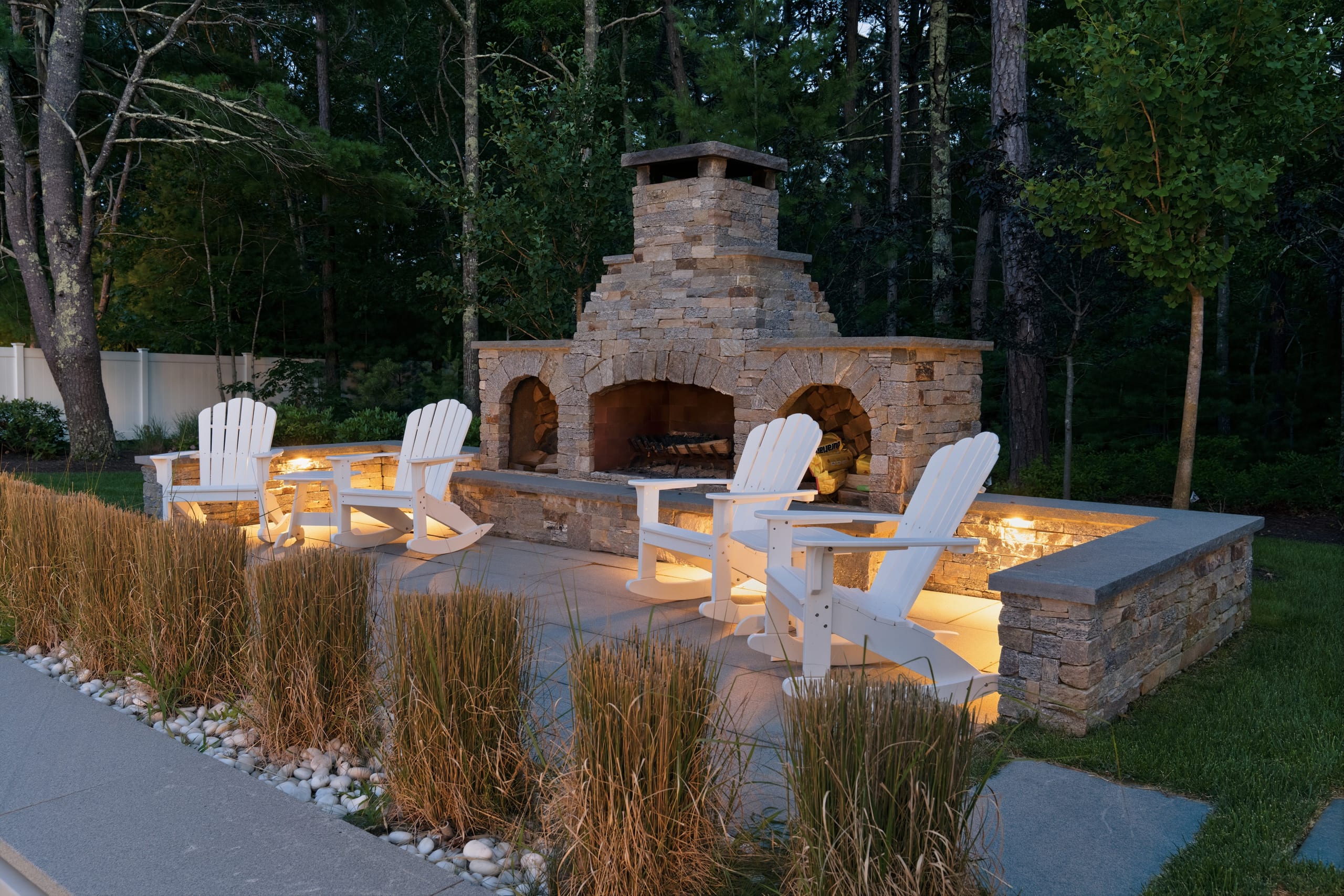
Avoiding a Patchwork Approach to Outdoor Lighting
Landscape lighting is often added gradually. One area receives lights, another project happens several years later, and eventually the property contains several independent lighting decisions.
There is nothing inherently wrong with improving a landscape in phases. The important part is maintaining a broader plan.
Before adding lighting to another part of an established property, consider how it relates to what already exists. Does it support the same important circulation routes? Are some areas unnecessarily bright while others that receive regular use remain overlooked? Has the landscape changed since the original lighting was planned?
Taking a whole-property view can help individual improvements work together over time.
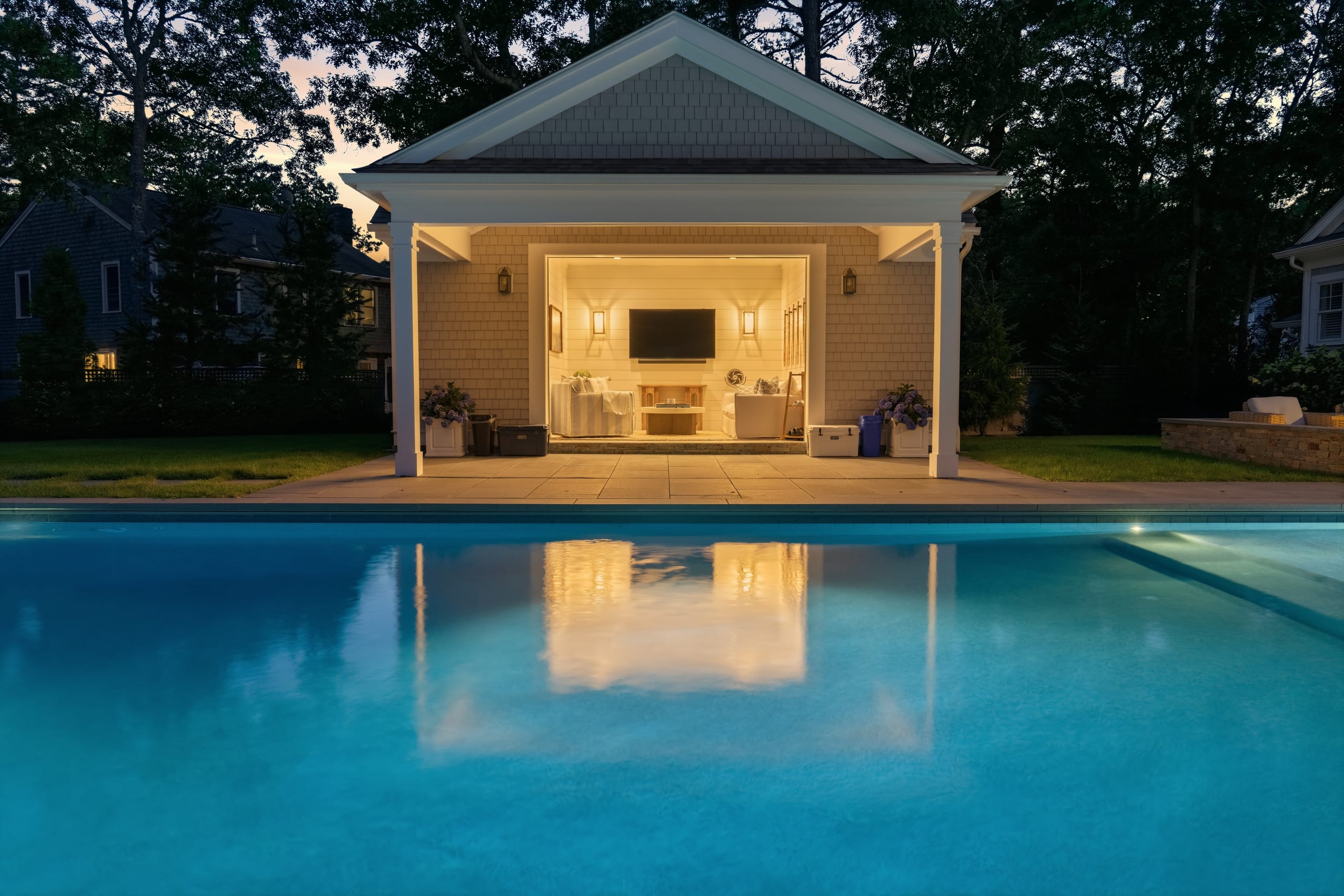
Landscape Lighting as Part of Full-Service Property Care
Landscape lighting does not exist separately from the landscape around it.
Plants grow. Gardens evolve. New outdoor spaces are built. Paths change. Property needs can shift as homeowners use the landscape differently.
Outerland provides design, construction, gardening, and ongoing landscape care throughout Barnstable and Cape Cod. This full-service approach makes it possible to consider lighting alongside both current property conditions and future improvements.
Homeowners planning additional work can explore Outerland’s broader landscaping services in Barnstable to see how lighting can connect with other parts of a long-term property plan.
Why Choose Outerland for Landscape Lighting in Barnstable?
Outerland brings more than three decades of New England landscape experience to properties throughout Cape Cod. Our approach considers landscape lighting within the context of the complete property, including its design, planting, hardscape, circulation, and outdoor spaces.
For established properties, that means identifying where lighting can improve the existing landscape without forcing unnecessary changes.
For new construction and major landscape improvements, it means discussing nighttime use while the broader property is still being planned.