
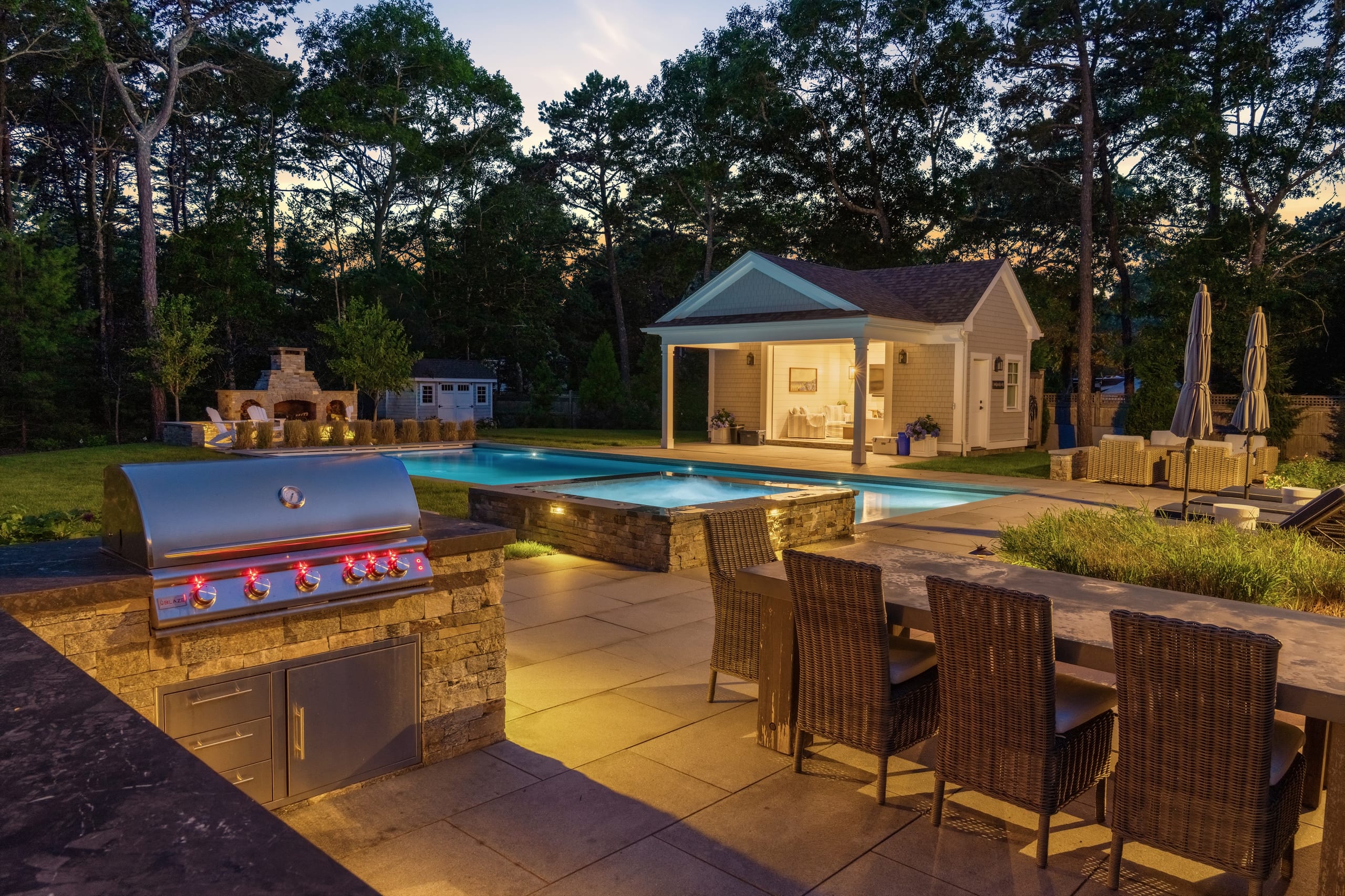
Landscape Lighting That Complements an Established Property
Many Chatham properties already have landscapes with their own character. Mature plantings, established gardens, stone walls, paths, patios, and other features may have developed over many years.
Adding landscape lighting does not mean every part of that property needs to be illuminated.
A better approach starts by identifying the areas that matter most after dark. That might be the walkway guests use to reach the house, a garden visible from an outdoor seating area, an established tree that provides structure to the landscape, or stonework that becomes difficult to appreciate once daylight fades.
Selective placement can help those features remain part of the nighttime landscape while allowing darker areas to provide contrast and depth.
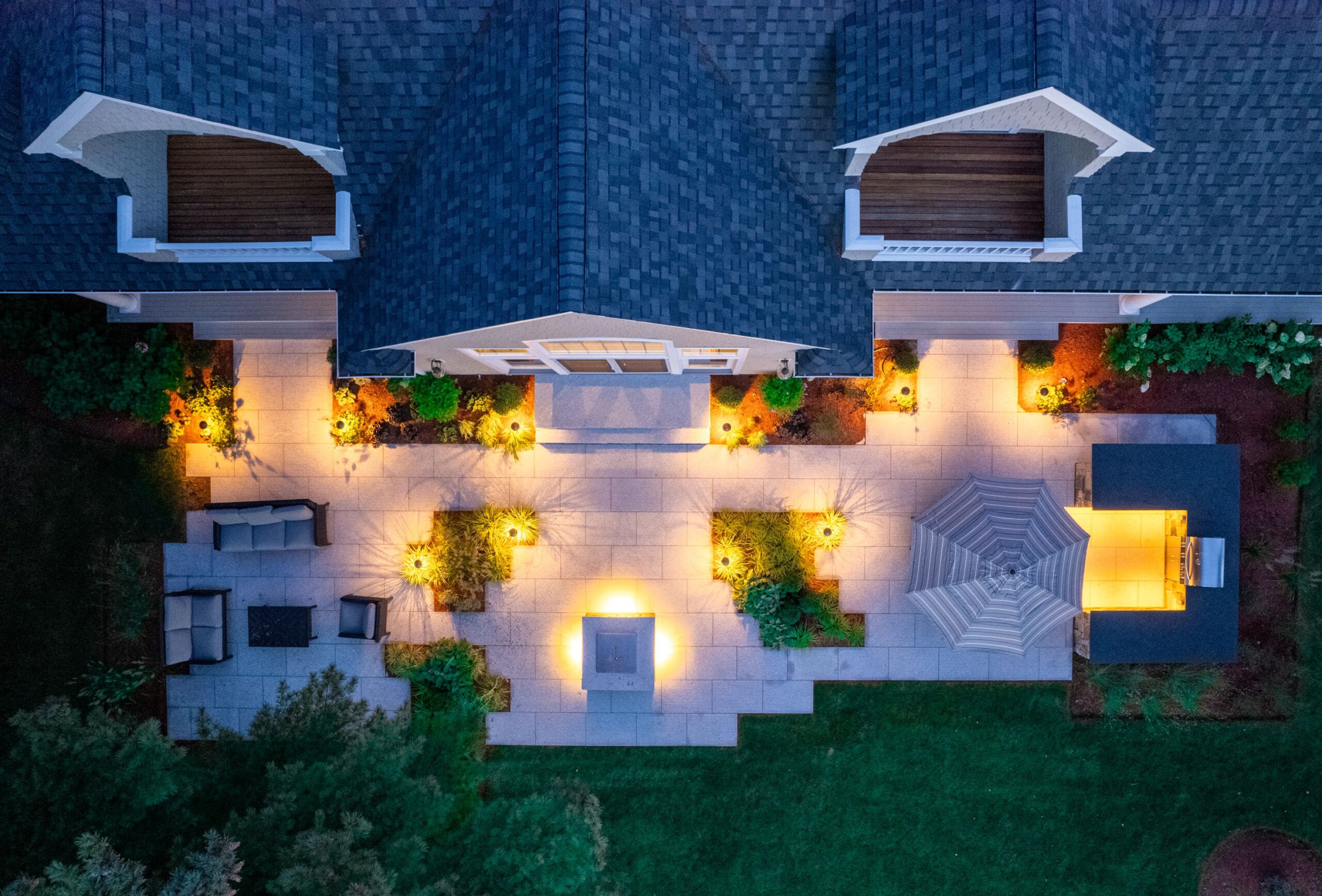
Can Outdoor Lighting Be Added Without Redesigning the Entire Landscape?
Yes. Landscape lighting can be planned around an existing property without requiring a complete landscape renovation.
The first step is evaluating what is already there. Paths, plantings, masonry, outdoor rooms, entrances, and circulation patterns provide the framework for deciding where lighting could make a meaningful difference.
An established garden, for example, may only need a few carefully considered points of illumination. A patio may benefit from lighting along the route connecting it to the house. A walkway with changes in direction or elevation may call for a different approach.
Outerland’s experience with gardens in Chatham also allows planting and lighting considerations to be viewed together rather than as unrelated parts of the property.
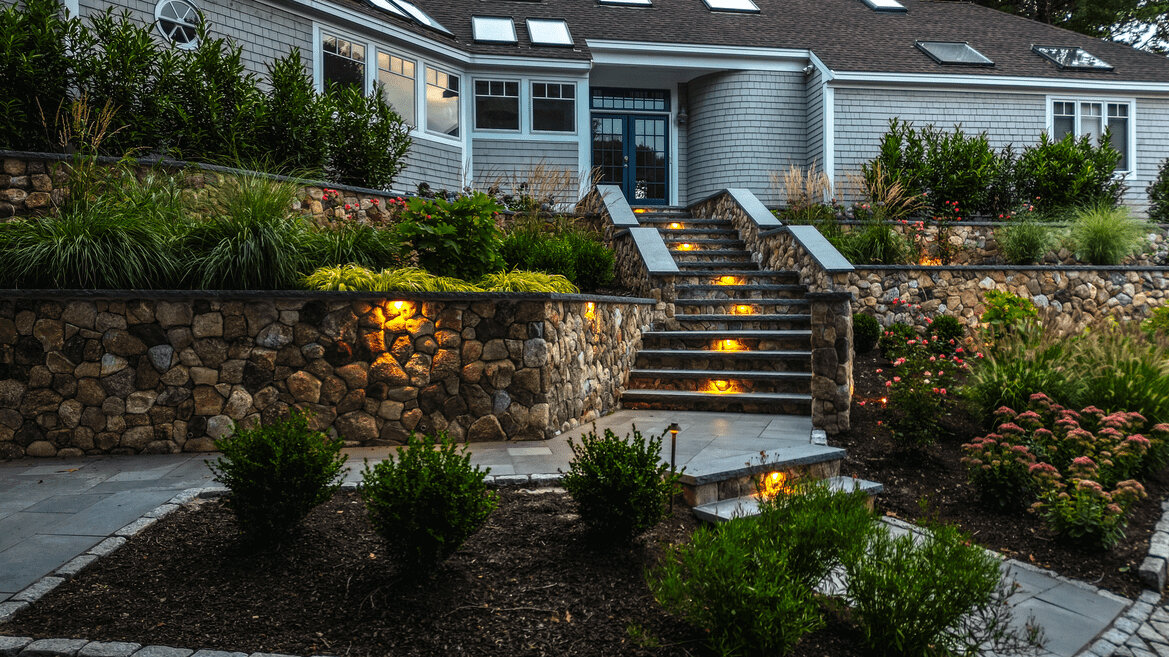
Lighting Garden Paths and Walkways in Chatham
Paths are often among the first places homeowners consider when planning outdoor lighting.
Good pathway lighting should help people understand where they are going without turning every walkway into a brightly illuminated corridor. Placement can respond to turns, steps, intersections, entrances, and transitions between different outdoor areas.
The surrounding landscape matters too. A path through a garden should feel different from the approach along a driveway or the route connecting a patio to the house.
Considering the path and its surroundings together creates a more cohesive result than simply spacing lights at identical intervals.
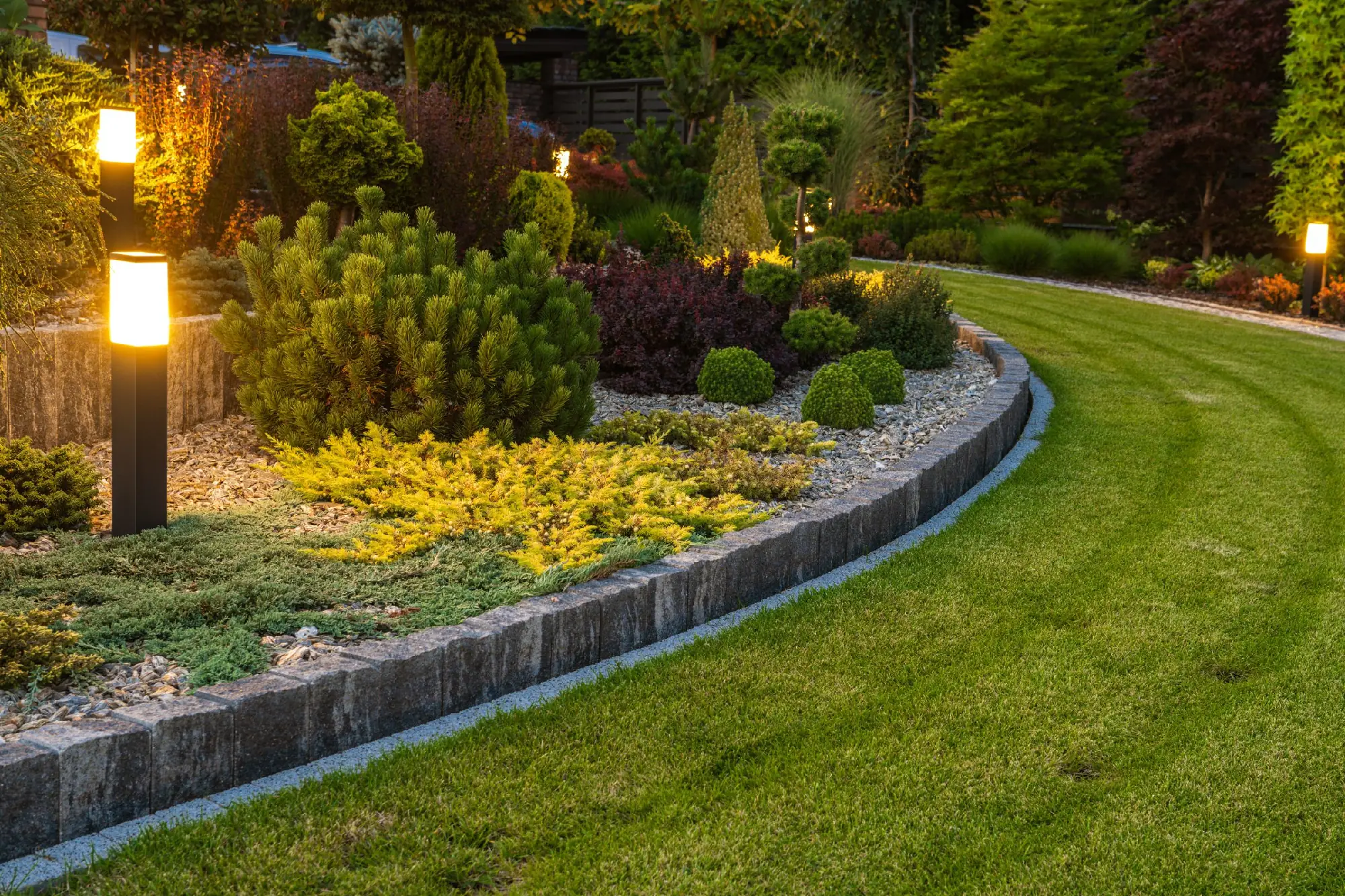
Highlighting Gardens Without Over-Lighting Them
Gardens provide some of the most interesting opportunities for landscape lighting because plants create shape, texture, movement, and changing views throughout the year.
The objective does not need to be illuminating an entire planting bed. Selecting a few important elements can often have greater impact.
A mature tree may create an interesting focal point. A layered planting area can gain additional depth after dark. An architectural plant near a patio or entrance may deserve more attention than the surrounding vegetation.
This selective approach also recognizes that gardens are living landscapes. Plant material grows and changes, so lighting should complement the garden rather than overpower it.
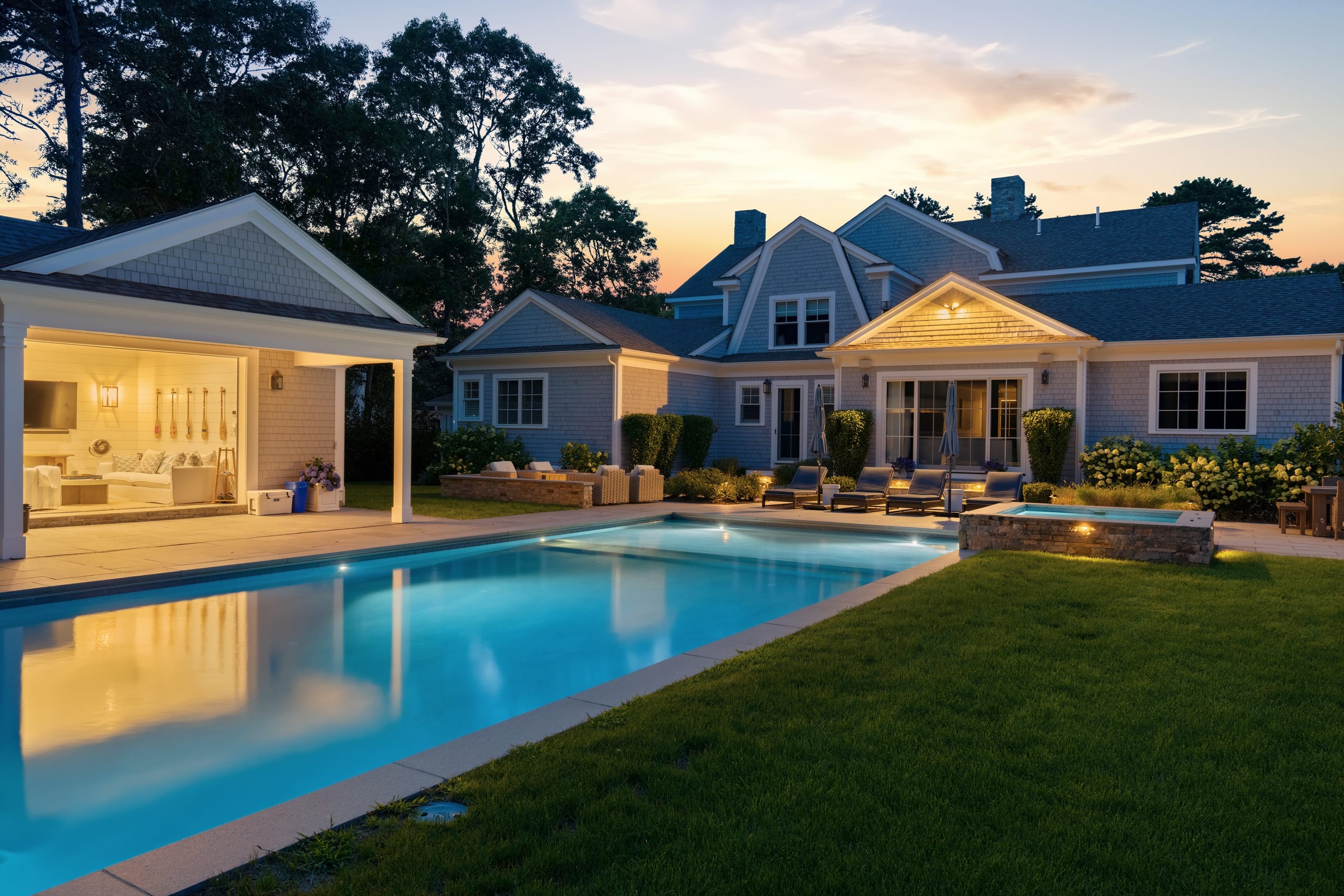
Landscape Lighting for Stonework and Hardscapes
Masonry and hardscape features frequently organize how a property is used.
Patios create places to gather. Walkways establish movement. Steps connect changes in grade. Stone walls and other masonry elements may define spaces or contribute significant visual character.
Outdoor lighting can help those constructed elements remain understandable after dark while also drawing attention to texture and craftsmanship where appropriate.
For homeowners considering new patios, walkways, steps, or other masonry improvements, Outerland’s hardscape and masonry services in Chatham allow lighting to be considered alongside the construction itself.
That can be especially useful when a project is changing how people will move between the house, garden, and outdoor gathering areas.
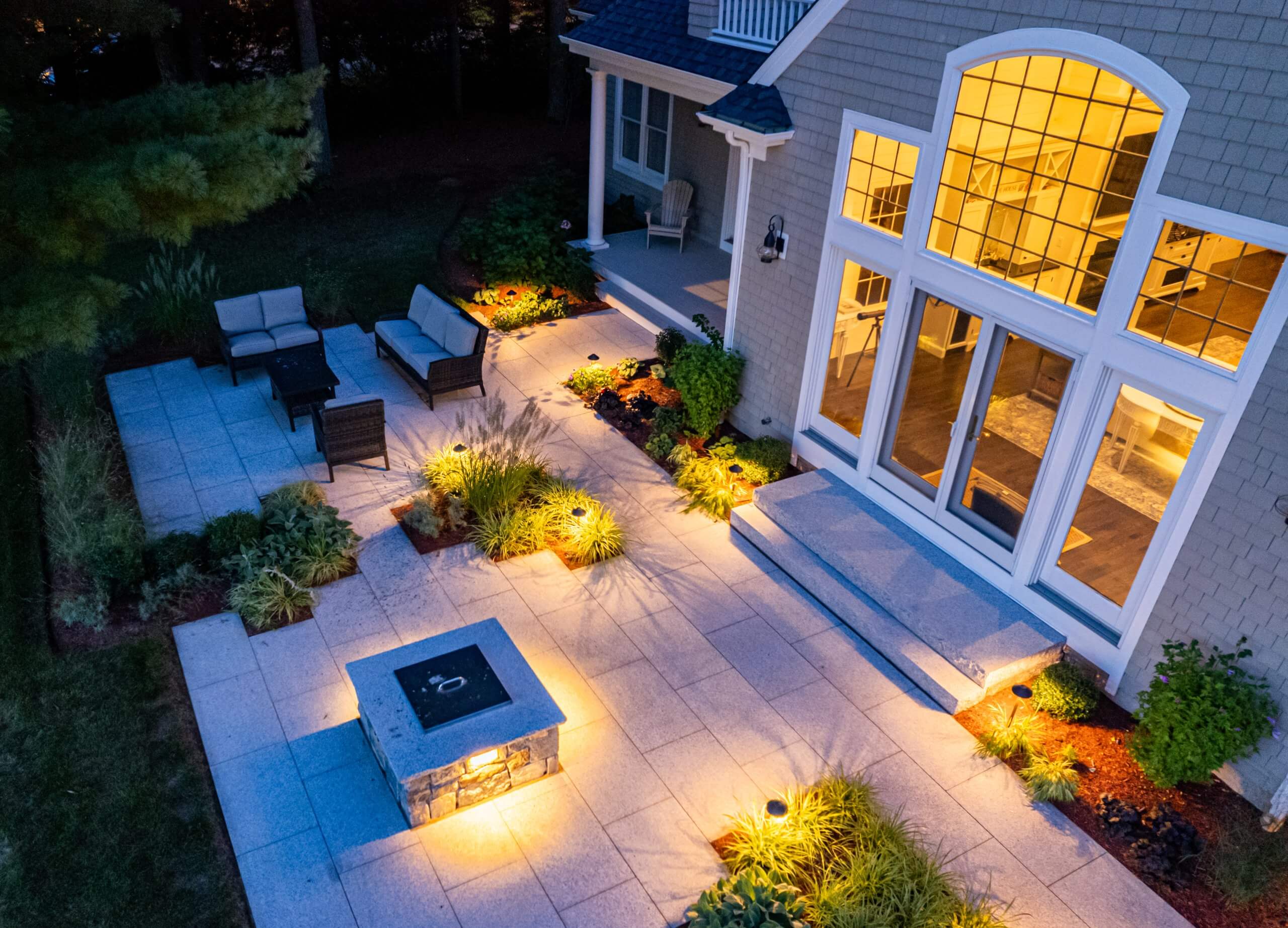
Creating Better Transitions Between Outdoor Spaces
Some properties do not have one central outdoor space. Instead, they contain several distinct areas connected by paths, lawns, gardens, steps, or other landscape features.
Landscape lighting can help create continuity between them.
Rather than focusing exclusively on a patio or entrance, a lighting plan can consider the experience of moving through the entire property. The transition from driveway to front door, house to patio, patio to garden, or one gathering space to another can all influence where lighting is most useful.
This whole-property perspective is particularly valuable when landscape lighting is part of a broader landscape installation and construction project in Chatham.
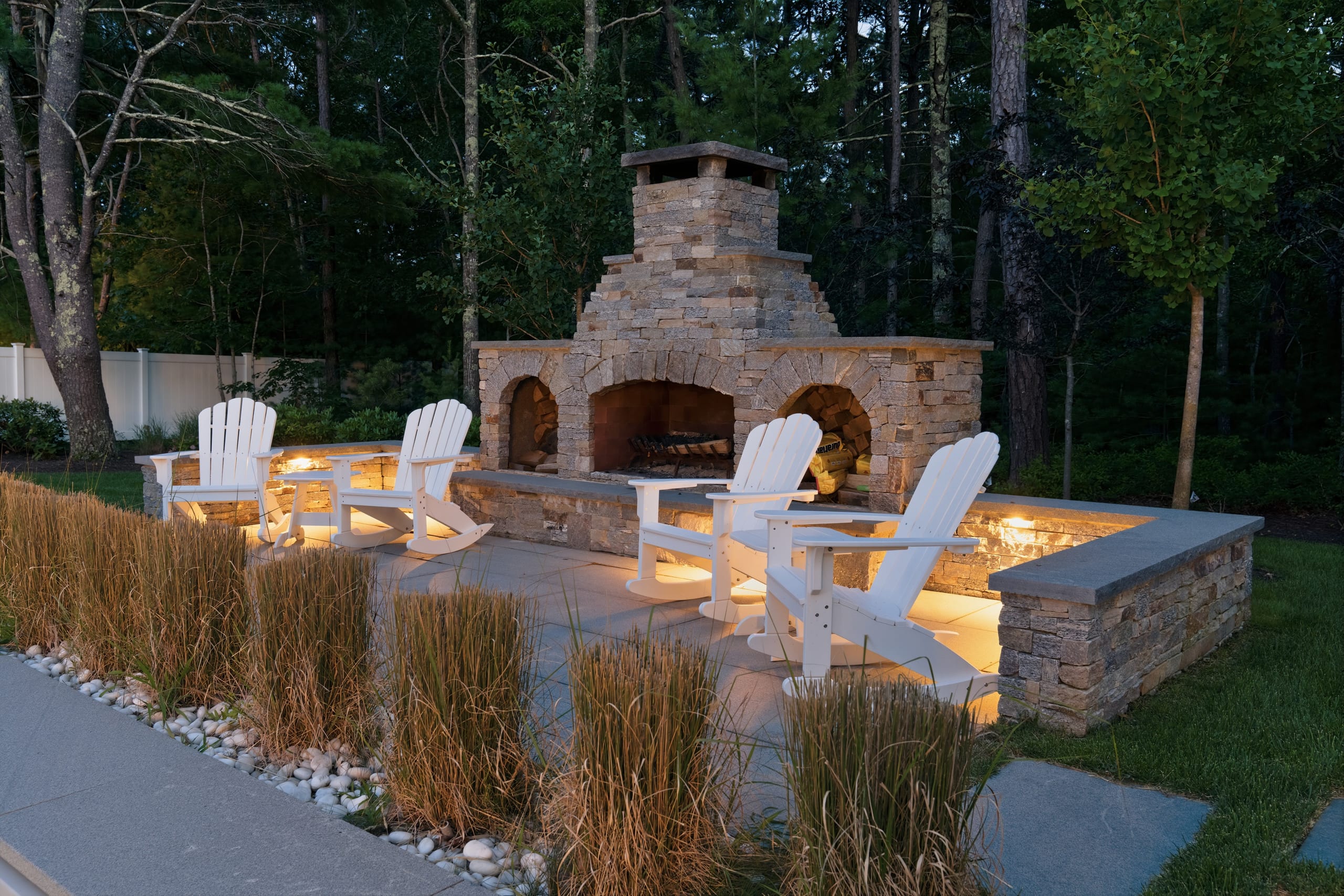
Should Landscape Lighting Be Subtle?
For many residential landscapes, subtlety is an important part of good lighting design.
More light does not automatically create a better outdoor environment. Excessive or poorly placed illumination can flatten the landscape visually, drawing equal attention to areas that do not need it.
A more considered approach uses contrast. Important paths and gathering spaces receive the visibility they need, while selected landscape features become focal points. Other areas can remain quieter.
The appropriate balance depends on the property and the homeowner’s goals. A frequently used entrance has different lighting needs than a garden viewed primarily from inside the home.
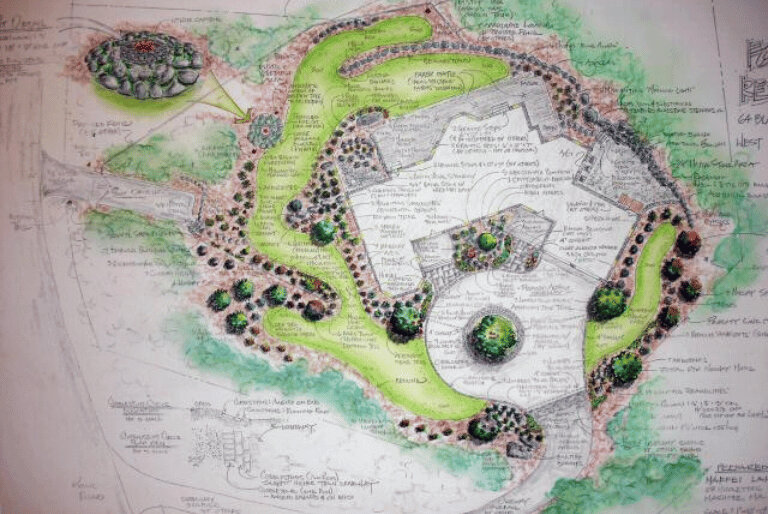
Plan Lighting Alongside Future Landscape Improvements
Even if landscape lighting is the immediate priority, it helps to think about how the property may change.
A future patio, expanded garden, new walkway, or larger landscape renovation can alter where people spend time and how they move through the site. Discussing those plans early can help avoid approaching every improvement as an isolated project.
Outerland provides landscape design, construction, gardening, and ongoing care throughout Chatham and the greater Cape Cod area. That broader perspective allows landscape lighting to become part of a long-term plan for the property rather than simply another feature added to it.
Homeowners considering improvements beyond lighting can explore our broader Chatham landscaping services for additional design, construction, gardening, and maintenance options.
Landscape Lighting Designed Around Your Chatham Property
No two established landscapes need exactly the same lighting plan. The most useful starting point is understanding what makes the property work during the day and determining which parts should remain functional, visible, or visually interesting after dark.
Outerland can help integrate landscape lighting into an existing Chatham property or incorporate it into a larger landscape design and construction project.
Contact Outerland to discuss landscape lighting for your Chatham, MA property.
Frequently Asked Questions
Yes. Existing gardens can be evaluated to identify plantings, paths, trees, and other features that would benefit from selective lighting. A good plan works with the established landscape rather than requiring the garden to be redesigned around the lighting.
Trees, layered planting areas, garden paths, stonework, walls, steps, entrances, patios, and other focal features can all be considered. The best choices depend on what is distinctive about the individual property and what homeowners want to see or use after dark.
Walkway lighting should respond to the route itself, particularly turns, steps, transitions, intersections, and areas where additional visibility is useful. It does not necessarily need to be placed at identical intervals along every edge of a path.
Landscape lighting can be planned around existing patios, walkways, steps, walls, and other masonry features. The surrounding landscape and how the hardscape is used should guide the lighting approach.
No. Landscape lighting can be a standalone improvement to an established property or one component of a larger landscape renovation. For larger projects, considering lighting during the design phase can help coordinate it with new plantings, paths, patios, and outdoor living areas.